Have you ever received a text message and wondered what a short slang word really means? If you are searching for dgaf meaning in text, you are probably curious about this popular internet abbreviation.
People often use it in texting, social media chats, and online conversations to express a strong feeling or attitude. However, its meaning can sometimes depend on the situation and the tone of the conversation.
Understanding this slang can help you avoid confusion when you see it in a message. In this guide, we will explain the meaning, usage, tone, and examples of DGAF in simple language. By the end, you will clearly understand what this abbreviation means and how people use it online.
What Does DGAF Mean in Text?
The abbreviation DGAF stands for “Don’t Give a F*.”** It is a slang expression used to say that someone doesn’t care at all about a person, opinion, situation, or outcome.
Because it contains profanity, DGAF is considered informal and is usually reserved for casual conversations among friends or online communities.
Primary Meaning
DGAF = Don’t Give a F* = I don’t care at all.**
People use it to express:
- Complete indifference
- Confidence
- Rebellious attitude
- Emotional detachment
- Not worrying about other people’s opinions
Alternative Meanings
Although Don’t Give a F*”** is by far the most common meaning, DGAF can occasionally represent different phrases in niche industries or organizations.
Possible alternative meanings include:
- Department-specific acronyms (internal company use)
- Gaming clan abbreviations
- Personal project names
- Community or group initials
These meanings are rare compared to the popular texting definition.
Examples
Friend:
Everyone keeps judging my outfit.
Reply:
DGAF. Wear what makes you happy.
Person A:
Aren’t you nervous about what they’ll say?
Person B:
Nope. DGAF 😂
DGAF Meaning in Text
DGAF in text means “Don’t Give a F*.”**
People use it to show that they do not care about something or someone’s opinion.
It is common in casual texting, social media, chats, and online conversations.
The expression can sound blunt, rude, or rebellious depending on the context.
Because it contains profanity, it is usually better suited to informal conversations.
What Does DGAF Mean in Texting?
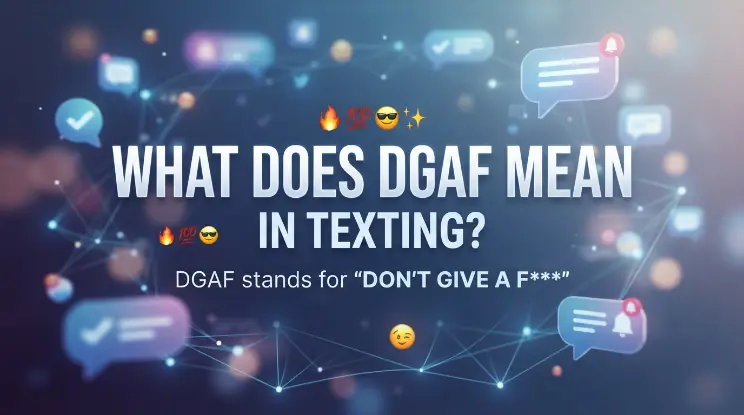
In texting, DGAF is used when someone wants to say that they are not concerned about a situation.
For example, a person might text “DGAF what they think” to show complete indifference.
The abbreviation saves time and makes the message sound more direct.
Its meaning can sometimes be playful among close friends.
However, using it with strangers or in professional messages may come across as disrespectful.
DGAF Meaning in Chat
In chat conversations, DGAF generally expresses a strong lack of concern or interest.
Someone may use it when they feel annoyed by criticism, drama, or other people’s opinions.
For example, “I DGAF anymore” means the person no longer cares about the situation.
The exact tone depends on the conversation and the relationship between the people chatting.
It is considered informal internet slang rather than standard English.
What Does DGAF Mean on Social Media?
On social media, DGAF is often used to express confidence, independence, or indifference.
People may include it in captions, comments, posts, or replies when they want to show they do not care about judgment.
It can sometimes be used humorously or as part of a bold attitude.
Because the phrase includes profanity, it may not be appropriate for every audience.
Its intended meaning is usually clear from the surrounding post or conversation.
Background & Origin
The phrase “Don’t Give a F*”** has existed in spoken English for decades. As texting became popular during the late 1990s and early 2000s, internet users began shortening long phrases into abbreviations to save time.
DGAF gained popularity through:
- Online forums
- Gaming communities
- Twitter/X
- Meme culture
- Hip-hop lyrics
- Viral TikTok videos
Today, it has become one of the most recognized internet slang terms expressing confidence or indifference.
Usage in Different Contexts
1. Text Messages
Friends often use DGAF during casual conversations.
Example:
I’m wearing sneakers to the wedding.
DGAF. They’ll survive.
2. Social Media
On Instagram, TikTok, and X, people use DGAF in captions to express confidence.
Examples:
- DGAF what they think 💯
- Living my best life. DGAF.
- DGAF energy today.
3. Professional Settings
DGAF is not recommended in workplaces because it includes profanity.
Instead, professionals usually say:
- I don’t mind.
- It doesn’t concern me.
- I’m okay with it.
- It isn’t a priority.
Example:
❌ DGAF about the meeting.
✅ I’m not particularly concerned about the meeting.
Platform-Specific Meanings
| Platform | Common Meaning | Example Use |
| Don’t Give a F*** | “DGAF what people say.” | |
| Confidence or attitude | “DGAF vibes today 😎” | |
| TikTok | Rebellious mindset | “Main character DGAF energy.” |
| Snapchat | Doesn’t care | “He DGAF anymore.” |
| Twitter/X | Strong opinion | “DGAF about the criticism.” |
Other Fields Using the Abbreviation
Outside internet slang, DGAF occasionally appears in specialized communities.
Examples include:
- Internal business abbreviations
- Gaming team names
- Software project names
- Private organization codes
- Personal branding
However, if you see DGAF in a text message or social media post, it almost always means Don’t Give a F*.”
Common Misconceptions & Mistakes
Many people misunderstand DGAF because internet slang changes rapidly.
Common mistakes include:
Mistake 1
Thinking DGAF means:
- Don’t Go Away Forever
It doesn’t.
Mistake 2
Assuming it’s professional language.
It isn’t.
Mistake 3
Using it in formal emails.
Since it contains profanity, avoid it in:
- Work emails
- College assignments
- Business meetings
- Customer communication
Similar Terms & Alternatives
| Term | Meaning | Example |
| IDC | I Don’t Care | IDC what happens. |
| IDGAF | I Don’t Give a F*** | IDGAF anymore. |
| Meh | Not interested | Meh, whatever. |
| YOLO | Live freely | YOLO, let’s go. |
| No worries | It’s okay | No worries at all. |
| Whatever | Doesn’t matter | Whatever works. |
| Care less | Not interested | I couldn’t care less. |
How to Respond Chat Examples
Friend
Friend:
Everyone keeps talking about me.
You:
DGAF. Focus on yourself.
Crush
Crush:
My friends don’t approve.
You:
DGAF if we’re happy together ❤️
Colleague
Coworker:
Should we tell the boss DGAF?
You:
Better not. Let’s keep it professional.
Differences from Similar Words
| Word | Meaning | Difference |
| DGAF | Doesn’t care at all | Strong emotional indifference |
| Secret | Hidden information | About privacy, not attitude |
| Private | Not public | Focuses on confidentiality |
| Confidential | Restricted information | Formal and professional |
| IDC | Doesn’t care | Softer than DGAF |
| IDGAF | I don’t give a f*** | Same meaning but includes “I” |
DGAF expresses a bold emotional attitude rather than describing information or privacy.
Relevance in Online Conversations & Dating Apps
Dating apps rely on quick, casual communication, making abbreviations common.
You might see profiles saying:
- DGAF about drama.
- DGAF what people think.
- Looking for someone who DGAF about social status.
In conversations:
Person A:
People judge age gaps.
Person B:
DGAF. If we’re happy, that’s enough. 😊
The abbreviation often signals confidence, independence, or a carefree personality.
Popularity & Trends Over Time
DGAF has remained popular for years because it reflects a confident, carefree attitude that resonates with internet culture.
You’ll frequently find it in:
- Viral memes
- TikTok captions
- Instagram reels
- X posts
- Reddit discussions
- Music lyrics
- Motivational quotes
Search interest tends to spike whenever slang trends or viral content introduce the abbreviation to new audiences.
FAQs
1. What does DGAF mean in text?
DGAF means “Don’t Give a F*,”** expressing that someone doesn’t care about a situation or opinion.
2. Is DGAF rude?
It can be. Since it includes profanity, it may sound offensive depending on the audience and context.
3. Can I use DGAF at work?
No. It’s best to avoid DGAF in professional communication because it’s considered inappropriate.
4. Is DGAF the same as IDC?
Both express not caring, but DGAF is stronger and more emphatic than IDC (I Don’t Care).
5. Where is DGAF most commonly used?
You’ll most often see DGAF in text messages, social media posts, memes, gaming chats, and casual online conversations.
Conclusion
Understanding dgaf meaning in text makes it easier to follow modern online conversations and recognize the tone behind a message. In most cases, DGAF simply means “Don’t Give a F*,”** expressing complete indifference, confidence, or a carefree attitude.
While it’s common on social media, in memes, and among friends, it’s generally unsuitable for professional settings due to its explicit language. As with any internet abbreviation, always consider the context before using or interpreting it.
Read More Articles
GFN Meaning in Text: Definition, Examples, and How to Use It for 2026
SMO Meaning in Text: Definition, Uses, and Examples for 2026
IGH Meaning in Text: Full Explanation with Real-Life Examples 2026
O7 Meaning in Text: Definition, Uses, and Examples for 2026

Daniel Harper is a passionate content writer and language enthusiast who specializes in explaining modern text meanings, slang, and digital communication in a simple and clear way. He enjoys breaking down complex expressions into easy-to-understand insights so readers can quickly learn and use them in real life. He is dedicated to creating helpful content that improves understanding of everyday language trends and online communication.