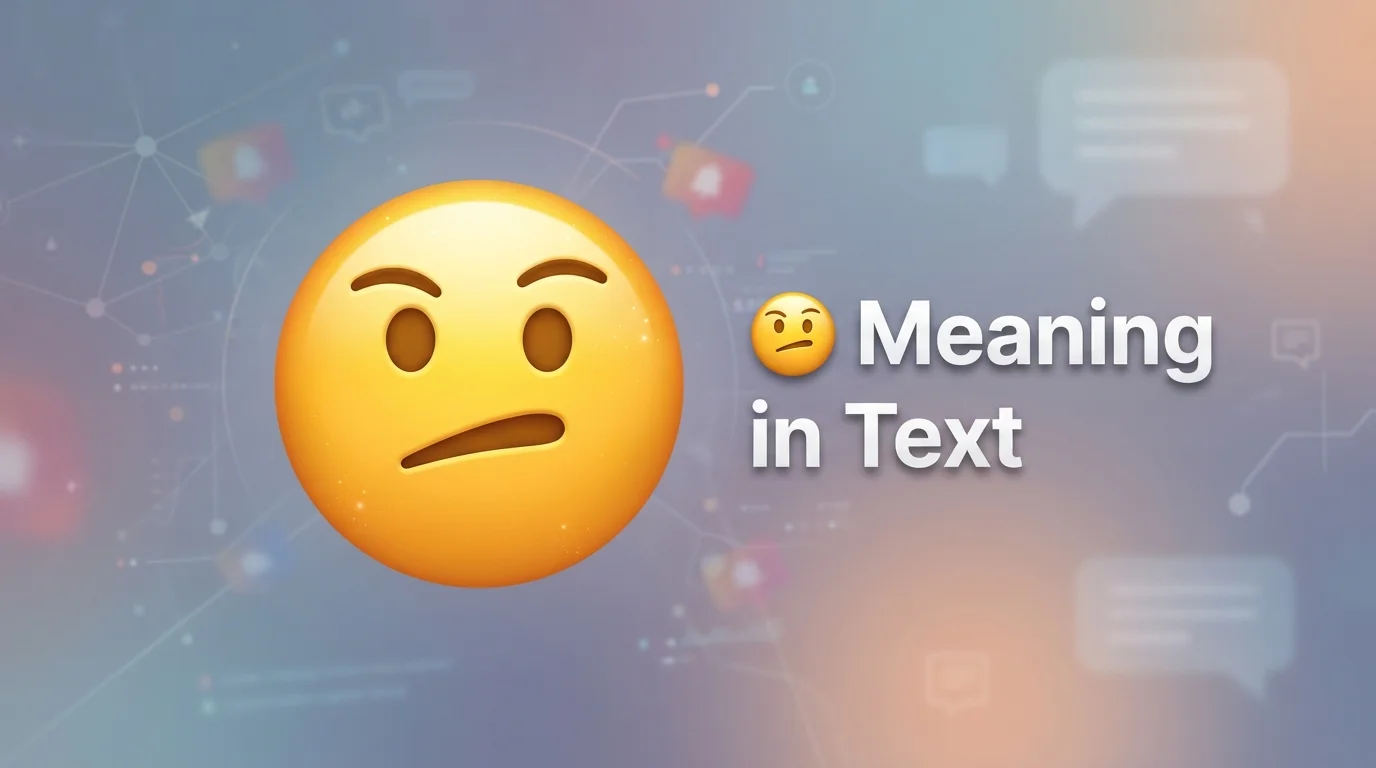
Looking for the 🫤 meaning in text? This emoji is commonly used when someone feels unsure, uncomfortable, disappointed, or simply not impressed by something. You may see 🫤 in text messages, social media comments, or chats when words alone cannot fully express a mixed or awkward feeling.
Its expression can suggest doubt, hesitation, mild frustration, or a feeling that something is not quite right. The exact meaning of 🫤 can change depending on the conversation and the relationship between the people chatting.
Understanding the context can help you know whether the sender is confused, disappointed, or simply reacting with an awkward feeling. In this guide, we will explain what 🫤 means in text and how people commonly use it in everyday conversations.
Meaning & Definition
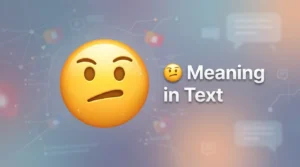
The 🫤 emoji is officially called Face with Diagonal Mouth. It shows a yellow face with a noticeably slanted mouth, creating an expression that sits somewhere between neutral, confused, skeptical, disappointed, and uncomfortable.
In everyday texting, 🫤 generally means “I’m not sure,” “I don’t really like that,” “That’s awkward,” “I’m not impressed,” or “I don’t know how to feel about this.” Its meaning depends heavily on the situation and the relationship between the people communicating.
The emoji was included in Unicode 14.0 and Emoji 14.0 in 2021. Unicode lists it as U+1FAE4, with the official name “Face with Diagonal Mouth.”
Common meanings of 🫤
Here are some of the most common interpretations:
- Uncertainty — “I’m not sure about this.”
- Skepticism — “I don’t completely believe you.”
- Awkwardness — “That was a little uncomfortable.”
- Disappointment — “That wasn’t what I expected.”
- Indifference — “Meh, I don’t really care.”
- Frustration — “This situation is annoying.”
- Confusion — “I don’t understand what is happening.”
- Mixed feelings — “I have no idea how I feel about this.”
Unicode’s original proposal included keywords such as “meh,” “eh,” “skeptical,” “huh,” “indifferent,” “unsure,” and “disappointed,” which explains why the emoji can communicate several related emotions.
🫤 meaning in a text message
If someone sends:
“He said he forgot again 🫤”
the emoji probably communicates disappointment or frustration.
If someone says:
“You actually believe that? 🫤”
it may communicate skepticism or doubt.
Another example:
“I guess we can go there 🫤”
Here, 🫤 may suggest reluctance or a lack of enthusiasm.
So, unlike an abbreviation with one fixed definition, the 🫤 meaning in text changes according to the sentence surrounding it.
Is 🫤 a sad emoji?
It can express mild sadness or disappointment, but 🫤 is not specifically a sad emoji.
Its expression is more ambiguous. It often represents an uncomfortable middle ground where someone is neither clearly happy nor clearly angry.
For example:
“The movie wasn’t terrible, but it wasn’t good either 🫤”
In this situation, the emoji means something like “meh” or “I’m undecided about it.”
Is 🫤 a negative emoji?
It can have a negative tone, but it is usually mild rather than strongly negative.
Someone using 🫤 may be disappointed, doubtful, uncomfortable, or unimpressed without necessarily being angry.
That makes it softer than emojis such as 😡 or 😠.
Background & Origin
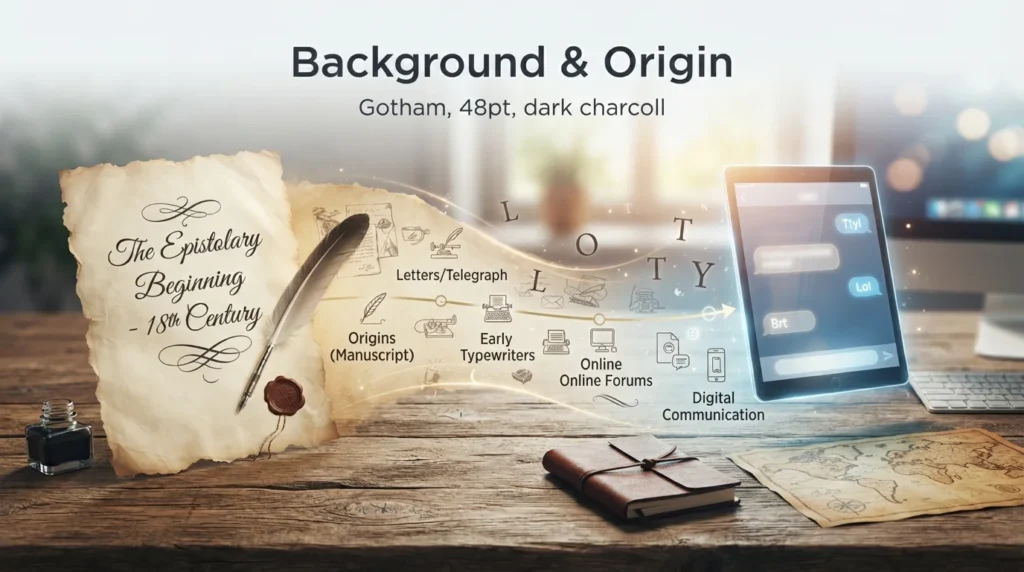
The 🫤 Face with Diagonal Mouth was introduced to provide a visual expression for feelings that were difficult to communicate with existing face emojis.
Before 🫤 existed, people often had to choose between emojis such as 😐, 😕, 😒, 😑, or 🙃. However, none of these perfectly captured the feeling of being uncertain, skeptical, disappointed, or simply “meh.”
The Unicode proposal for the emoji was submitted in June 2020. The proposal described the character as a yellow face with two eyes and a diagonal mouth and identified possible keywords including “meh,” “eh,” “skeptical,” “huh,” “indifferent,” “unsure,” and “disappointed.”
It was subsequently approved as part of Unicode 14.0 in 2021 and added to Emoji 14.0 that same year.
The design became useful because online communication often needs subtle emotional signals. A person may not be angry or sad, but they may still feel uncomfortable, doubtful, or unimpressed.
That emotional middle ground is where 🫤 fits particularly well.
Why did 🫤 become useful online?
Digital conversations remove many facial expressions and vocal cues that people naturally use in face-to-face communication.
When someone says:
“Okay.”
the reader may not know whether they are happy, annoyed, confused, or disappointed.
Adding:
“Okay 🫤”
changes the emotional tone.
The emoji tells the reader that the response probably contains some uncertainty, hesitation, or dissatisfaction.
Usage in Different Contexts
The meaning of 🫤 can change depending on where it appears.
Texting or chat messages
In private conversations, 🫤 is often used to communicate an emotional reaction without writing a long explanation.
For example:
Friend: “I canceled our plans because I got busy.”
You: “Okay 🫤”
This may communicate mild disappointment.
Another example:
Friend: “I think he is telling the truth.”
You: “🫤 I don’t know about that.”
Here, the emoji supports skepticism.
It can also make a potentially blunt message sound less harsh:
“I’m not sure that’s a good idea 🫤”
Instead of directly saying “That’s a bad idea,” the emoji creates a softer and more uncertain tone.
Social media platforms
On Instagram, TikTok, Facebook, or X, people may use 🫤 in comments when reacting to something they find questionable, awkward, disappointing, or underwhelming.
For example:
“Everyone says this is the best movie ever 🫤”
The commenter may be expressing that they disagree with the hype.
Another example:
“That outfit choice 🫤”
This can imply that the person is not impressed without directly saying something negative.
Professional or technical settings
The emoji is much less common in formal workplace communication.
A coworker might use it in an informal team chat:
“The client changed the deadline again 🫤”
Here it communicates frustration or disappointment.
However, in a formal email, report, proposal, or official document, it is generally better to describe the emotion or issue directly rather than relying on an emoji.
For example, instead of:
“The deadline moved again 🫤”
a formal message could say:
“The deadline has been moved again, which may affect the current schedule.”
Platform-Specific Meanings
The basic meaning of 🫤 remains fairly consistent across platforms, although the surrounding culture can influence how people interpret it.
| Platform | Common Meaning | Example Use |
| Uncertainty, disappointment, awkwardness | “You forgot again 🫤” | |
| Skepticism or unimpressed reaction | “Everyone loves this? 🫤” | |
| TikTok | “Meh,” doubt, or awkward reaction | “That ending 🫤” |
| Snapchat | Mixed feelings or hesitation | “I guess we can go 🫤” |
| Twitter/X | Skepticism, disagreement, or disappointment | “That explanation 🫤” |
The exact interpretation still depends on the conversation. Emojis do not have a universal emotional meaning in every message.
Other Fields Using the Emoji
Unlike abbreviations such as DL, DM, or FYI, 🫤 is primarily an emoji rather than a shortened technical or professional term.
Therefore, it does not have established meanings such as “Download,” “Driver’s License,” or a medical abbreviation.
Its main function is emotional and conversational communication.
Digital communication
The most common use is expressing an emotional reaction in:
- Text messages
- Group chats
- Social media comments
- Direct messages
- Online communities
- Dating apps
- Gaming chats
Informal workplace communication
In casual workplace messaging, 🫤 can communicate mild frustration or uncertainty.
For example:
“The meeting has been moved to 7 AM 🫤”
The sender probably isn’t literally confused. They may be saying that they are unhappy about the schedule.
Online communities
People may also use 🫤 as a reaction to questionable claims or unpopular opinions.
For example:
“He says he can finish the entire project tonight 🫤”
This can mean:
“I’m not convinced.”
Common Misconceptions & Mistakes
Because 🫤 has an ambiguous facial expression, people sometimes interpret it incorrectly.
Mistake 1: Thinking it always means sadness
🫤 can indicate disappointment, but it does not necessarily mean the person is sad.
Compare:
“I didn’t get the job 🫤”
Here, disappointment is likely.
But:
“You really think that’s true? 🫤”
Here, skepticism is more likely.
Mistake 2: Assuming it always means anger
The emoji is usually much softer than an angry face.
Someone may be irritated without actually being angry.
Mistake 3: Treating it like 😐
The neutral face 😐 generally looks emotionally flat.
🫤 has a diagonal mouth, making it more expressive.
It can communicate hesitation, uncertainty, or dissatisfaction that is not necessarily present in 😐.
Mistake 4: Assuming the sender dislikes you
If someone replies:
“Okay 🫤”
it does not automatically mean they are upset with you.
They could simply be uncertain about the situation.
Always consider the previous messages.
Mistake 5: Ignoring context
This is the biggest mistake.
For example:
“We have to work Saturday 🫤”
probably expresses disappointment.
But:
“Do you seriously believe that story? 🫤”
probably expresses skepticism.
The same emoji can communicate different shades of emotion.
Similar Terms & Alternatives
Several emojis and expressions can appear similar to 🫤, but each has a slightly different emotional tone.
| Emoji or Term | Meaning | Example |
| 😐 | Neutral or emotionless | “Okay 😐” |
| 😕 | Confused or uncertain | “I don’t understand 😕” |
| 😒 | Unamused or annoyed | “Sure 😒” |
| 😑 | Expressionless or fed up | “Whatever 😑” |
| 🙃 | Awkward or ironic | “Everything is fine 🙃” |
| 🤨 | Suspicious or questioning | “Really? 🤨” |
| “meh” | Unimpressed or indifferent | “The movie was meh.” |
| “idk” | I don’t know | “Idk what to say.” |
| “hmm” | Thinking or hesitation | “Hmm, maybe.” |
For related abbreviation content, you can also create internal links to pages covering terms such as IDK meaning in text, WYM meaning in text, SMH meaning in text, and FR meaning in text.
These related pages can help readers understand other expressions that frequently appear alongside emotional emojis.
How to Respond Chat Examples
Knowing what 🫤 means in text is only half the process. You may also wonder how to respond when somebody sends it.
Conversation 1: With a friend
Friend:
“I forgot to bring your book 🫤”
You:
“Lol, no worries. Just bring it tomorrow 😂”
Here, the sender may be expressing embarrassment or frustration with themselves.
Conversation 2: With a crush
You:
“So you’re saying you don’t want to go out?”
Crush:
“I didn’t say that 🫤”
You:
“Okay, now I’m confused 😅 What are you saying?”
Here, 🫤 could indicate uncertainty or a complicated emotional response.
Rather than assuming the person is angry, asking for clarification is safer.
Conversation 3: With a colleague
Colleague:
“The client moved the presentation to Monday 🫤”
You:
“That’s earlier than expected. Let’s see what we can finish today.”
In this example, 🫤 communicates mild frustration or disappointment.
Differences from Similar Words
Understanding the difference between 🫤 and words such as secret, private, or confidential is important because the emoji does not communicate secrecy.
🫤 vs. Secret
Secret means information that someone does not want others to know.
Example:
“Don’t tell anyone. It’s a secret.”
🫤 does not mean secret.
🫤 vs. Private
Private describes something intended for a limited person or group.
Example:
“This is a private conversation.”
The emoji has no direct connection to privacy.
🫤 vs. Confidential
Confidential usually refers to information that should be protected or shared only with authorized people.
Example:
“The document contains confidential information.”
Again, 🫤 does not mean confidential.
🫤 vs. “Meh”
These two are much closer.
“Meh” expresses indifference or a lack of enthusiasm.
The 🫤 emoji can communicate “meh,” but it can also express uncertainty, skepticism, awkwardness, or disappointment.
So:
“The food was meh.”
means the food was not particularly impressive.
But:
“The food was good 🫤”
could suggest that the person is uncertain, hesitant, or has mixed feelings.
Relevance in Online Conversations & Dating Apps
The 🫤 meaning in text becomes especially interesting in dating conversations because emotional tone can be difficult to understand through short messages.
Imagine someone says:
“Maybe we can meet sometime 🫤”
The emoji may make the message sound hesitant.
However, it does not automatically mean rejection.
It could mean:
- They are unsure.
- They feel awkward.
- They are not enthusiastic.
- They are thinking about the suggestion.
- They have mixed feelings.
🫤 from a girl
If a girl sends 🫤, the meaning depends on what she said before and after it.
For example:
“You disappeared for two days 🫤”
This may communicate disappointment.
But:
“I don’t know what you mean 🫤”
is more likely to communicate confusion.
Avoid assuming that the emoji automatically means she is angry or losing interest.
🫤 from a guy
The same applies when a guy uses 🫤.
For example:
“You really want to go there? 🫤”
could communicate doubt.
Or:
“I guess I’ll come 🫤”
could communicate reluctance.
On dating apps
Dating conversations often contain short replies, making emojis especially useful for adding emotional context.
For example:
“So we’re actually going on a second date? 🫤”
Depending on the conversation, this could be playful uncertainty, hesitation, or skepticism.
The best way to understand it is to look at the complete conversation rather than interpreting the emoji alone.
Popularity & Trends Over Time
🫤 is a relatively modern emoji compared with many classic faces.
It was approved as part of Unicode 14.0 in 2021, so it entered mainstream emoji communication much later than faces such as 😐, 😕, or 😒.
Its usefulness comes from its ability to represent an emotional middle ground.
Online conversations frequently involve reactions such as:
- “I’m not convinced.”
- “That’s awkward.”
- “I’m not impressed.”
- “I don’t know.”
- “That’s disappointing.”
- “Meh.”
- “I’m unsure.”
Instead of writing a complete sentence, people can sometimes use 🫤 to communicate the general feeling instantly.
The original Unicode proposal also referenced Google Trends data while discussing expected usage for the emoji, showing that the concept was considered relevant to online expression during the proposal process.
Why people use it in memes and social posts
The expression is visually unusual because the mouth is tilted diagonally.
That makes it useful for reactions to awkward, questionable, ironic, or underwhelming situations.
For example:
“When your boss says ‘quick meeting’ and it lasts two hours 🫤”
The emoji adds a subtle reaction without requiring an angry or dramatic response.
What Does 🫤 Mean From a Girl?
When a girl sends 🫤, it can mean several things depending on the conversation.
Common possibilities include:
- “I’m not sure.”
- “I’m disappointed.”
- “That feels awkward.”
- “I don’t really like that.”
- “I’m skeptical.”
- “I’m not impressed.”
For example:
“You forgot our plans again 🫤”
This likely communicates disappointment.
But:
“Wait, you’re serious? 🫤”
is more likely skepticism or disbelief.
Don’t assume romantic meaning from the emoji alone.
What Does 🫤 Mean From a Guy?
When a guy uses 🫤, it can similarly express uncertainty, disappointment, hesitation, or skepticism.
For example:
“I guess we can do that 🫤”
may suggest reluctance.
Meanwhile:
“You believe that? 🫤”
may communicate doubt.
The emoji itself does not establish whether the person is flirting, annoyed, joking, or rejecting someone.
The surrounding text provides the missing context.
Is 🫤 Flirty?
Sometimes, but 🫤 is not inherently a flirty emoji.
In a playful conversation, someone might use it teasingly:
“So you finally admit you like me 🫤”
Here, the emoji could add a playful or skeptical tone.
However, in another conversation:
“You canceled again 🫤”
it may simply express disappointment.
Therefore, context matters more than the emoji itself.
Is 🫤 Rude?
Usually, 🫤 is not strongly rude.
It can make a message sound slightly negative, doubtful, or unimpressed, but it is generally much softer than an openly angry response.
For example:
“That’s an interesting idea 🫤”
could sound skeptical.
If the relationship is casual, the emoji may be playful. In a serious conversation, however, it could be interpreted as criticism.
🫤 vs. 😕 vs. 😒 vs. 😐
These emojis can look similar in certain conversations, but they have different emotional tendencies.
🫤 — Face with Diagonal Mouth
Usually suggests uncertainty, skepticism, awkwardness, disappointment, or “meh.”
😕 — Confused Face
Usually suggests confusion, uncertainty, or not understanding something.
😒 — Unamused Face
Usually suggests annoyance, dissatisfaction, or lack of enthusiasm.
😐 — Neutral Face
Usually communicates a flat or neutral reaction.
For example:
“I don’t understand the instructions 😕”
is clearly about confusion.
“The instructions are weird 🫤”
may communicate uncertainty or dissatisfaction.
“The instructions again? 😒”
sounds more annoyed.
“Okay 😐”
sounds emotionally neutral.
Frequently Asked Questions
What does 🫤 mean in text?
🫤 usually means uncertainty, skepticism, awkwardness, disappointment, indifference, or a mild “meh” reaction. Its exact meaning depends on the surrounding conversation.
What is the official name of 🫤?
The official Unicode name is Face with Diagonal Mouth. Its Unicode code point is U+1FAE4.
Does 🫤 mean sad?
Not necessarily. It can communicate disappointment or an uncomfortable feeling, but it is not specifically a sadness emoji.
Does 🫤 mean “I don’t know”?
It can. If someone is uncertain about something, they may use 🫤 to communicate hesitation or “I’m not sure.”
For example:
“Are you coming tonight? 🫤”
could mean the person has not decided yet.
Does 🫤 mean someone is angry?
Usually not. It can communicate mild frustration or dissatisfaction, but it is generally less intense than angry emojis such as 😠 or 😡.
What does 🫤 mean from a girl or guy?
From either a girl or a guy, 🫤 can express uncertainty, skepticism, disappointment, awkwardness, or hesitation. Its meaning is determined by the context rather than the sender’s gender.
Is 🫤 a negative emoji?
It can have a mildly negative tone, especially when used to show disappointment or skepticism. However, it can also simply express uncertainty or mixed feelings.
Conclusion
The 🫤 meaning in text is best understood as a flexible expression of uncertainty, skepticism, awkwardness, disappointment, indifference, or “meh.” It is officially known as Face with Diagonal Mouth and was introduced with Unicode 14.0 in 2021.
Unlike a traditional abbreviation, 🫤 does not have one fixed definition that works in every conversation. A message such as “Okay 🫤” may express disappointment, while “Really? 🫤” may communicate skepticism and “I guess 🫤” may suggest hesitation.
The most important thing is to read the emoji together with the words around it. Whether you see 🫤 on WhatsApp, Instagram, TikTok, Snapchat, X, or a dating app, context, tone, and the relationship between the people involved can change its meaning.

I am William Scott, a passionate content creator and enthusiast dedicated to making complex topics simple and easy to understand. I focus on delivering valuable, well-researched, and engaging content that helps readers find clear answers quickly. I enjoy writing about digital trends, language meanings, and practical knowledge that adds real value to everyday learning.