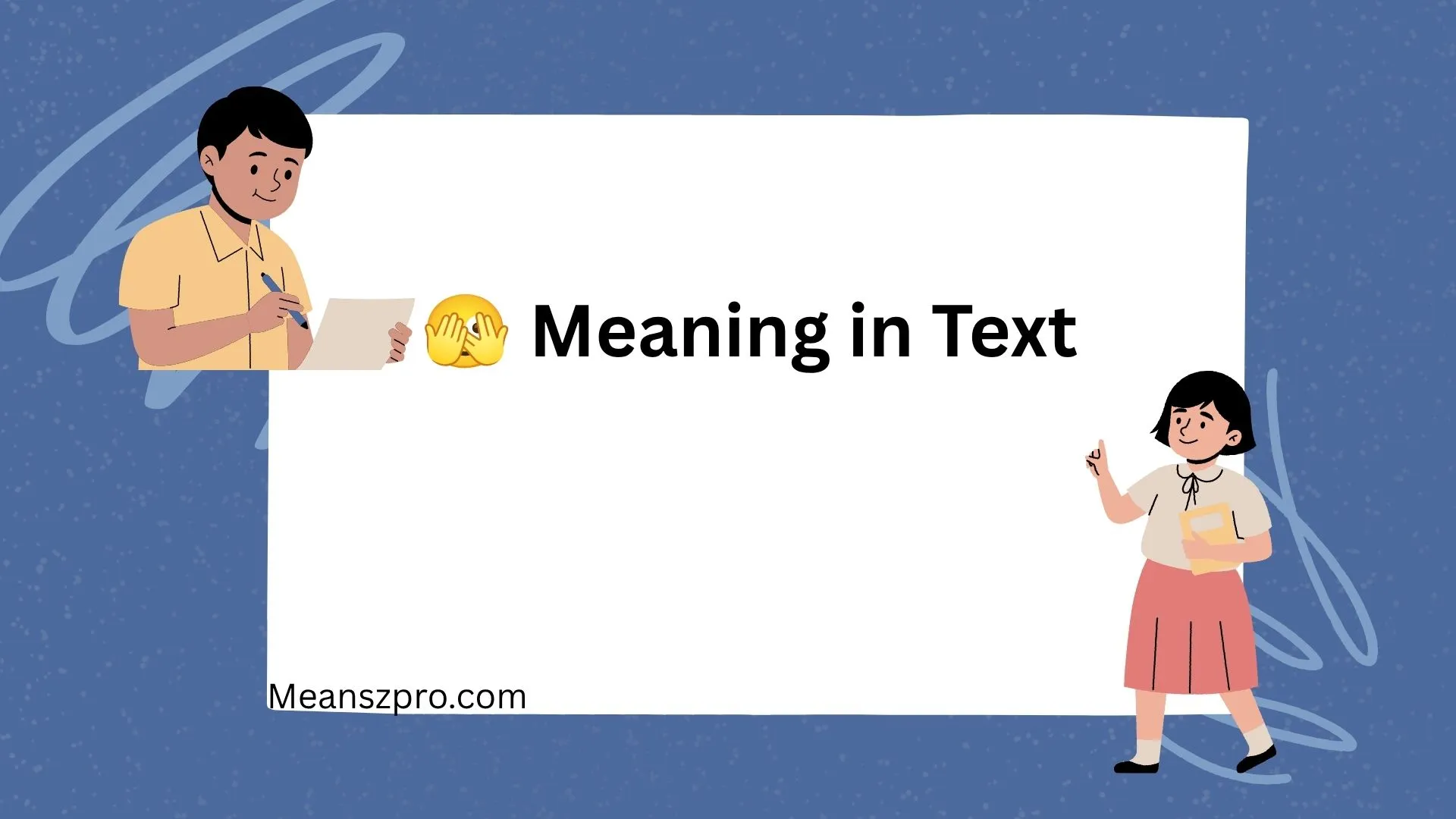
Looking for the meaning of 🫣 in text? You may have seen this emoji in a text message, Instagram comment, Snapchat chat, or social media post and wondered what someone is trying to express. The 🫣 emoji, also known as the Face with Peeking Eye emoji, is commonly used to show embarrassment, nervousness, shyness, or curiosity.
People often send it when they feel awkward, want to look at something but are afraid to see the result, or feel shy about a particular situation. It can also express playful reactions to gossip, secrets, surprises, or embarrassing moments.
Depending on the conversation, its meaning can be cute, funny, flirty, or even a little awkward. In this guide, you’ll discover what 🫣 means in text, how people use it on different social media platforms, and how to respond when someone sends it to you.
Meaning & Definition of 🫣
The 🫣 emoji is officially known as the Face with Peeking Eye emoji. It shows a face covering its eyes with its hands while peeking through its fingers. This visual represents the feeling of wanting to hide while still being curious enough to watch what is happening.
In everyday texting, 🫣 usually means embarrassment, shyness, nervous curiosity, awkwardness, or playful fear. It can express the feeling of seeing something surprising, reading an unexpected message, or wanting to know a secret while pretending not to look.
For example, imagine your friend tells you that someone has a crush on you. You might respond with 🫣 because you feel shy but are also excited to hear more.
Common meanings of 🫣 in text
- Embarrassment: You feel awkward about something that happened.
- Shyness: You are nervous about receiving attention or compliments.
- Curiosity: You want to see what happens even though you feel nervous.
- Playful awkwardness: You are reacting to something funny, uncomfortable, or unexpected.
- Fear of watching: Something is frightening or shocking, but you still want to look.
- Flirting: You feel shy or excited when someone says something romantic.
Examples of 🫣 in messages
Example 1: Embarrassment
Friend: “Everyone saw you trip in the hallway!”
You: “Please don’t remind me 🫣”
Here, the emoji expresses embarrassment and the desire to hide.
Example 2: Curiosity
Friend: “I have some gossip about your crush.”
You: “Tell me everything 🫣”
In this message, the emoji shows curiosity mixed with nervous excitement.
Does 🫣 have other meanings?
Outside casual conversations, the emoji does not have one universally accepted technical or professional definition. It is primarily a visual symbol used to communicate emotions and reactions.
In a workplace chat, for example, someone might use 🫣 after admitting a small mistake. In a group conversation, it might indicate that the sender is waiting nervously for someone’s response.
The surrounding words are important because the emoji can express anything from genuine embarrassment to lighthearted excitement.
Background & Origin of 🫣

The 🫣 emoji became part of the Unicode Standard with Unicode 14.0 in 2021. It was introduced alongside other emoji designed to help people express emotions and reactions that are difficult to communicate through plain text.
Its official name, Face with Peeking Eye, describes its appearance. The hands covering the face suggest hiding, while the visible eye communicates curiosity or the desire to see something despite feeling uncomfortable.
Before this emoji existed, people often used text expressions such as “I’m embarrassed,” “I can’t look,” “OMG,” or “🙈” to communicate similar feelings.
As messaging apps and social media platforms developed, emojis became a quick way to add emotional meaning to short messages. The 🫣 emoji became particularly useful for situations where a person wants to express two feelings at once: being uncomfortable and wanting to know more.
Why did 🫣 become popular online?
Several features make this emoji useful in online conversations:
- It communicates mixed emotions: You can feel nervous and curious at the same time.
- It makes awkward moments playful: The emoji can soften an embarrassing confession.
- It works with short messages: A single emoji can communicate a reaction without a long explanation.
- It fits internet humor: People use it in memes about crushes, gossip, embarrassing memories, and uncomfortable situations.
- It supports indirect communication: You can hint at your feelings without saying exactly what you mean.
For example, a person might post, “Me checking my exam results 🫣.” The emoji makes the nervous anticipation clear without needing an explanation.
Usage of 🫣 in Different Contexts
The meaning of 🫣 depends on the situation in which it appears. Understanding the context helps you identify whether the sender is embarrassed, curious, flirting, or reacting to something uncomfortable.
🫣 in texting and chat messages
In private messages, 🫣 commonly appears when someone feels awkward, shy, or curious. It can also make a confession sound less serious or help someone react humorously to unexpected news.
Examples:
- “I accidentally sent that message to the wrong person 🫣”
- “You actually told her you like her? 🫣”
- “I haven’t checked my grades yet 🫣”
- “Okay, I’m listening. Tell me the secret 🫣”
In the first example, the emoji expresses embarrassment. In the second, it suggests surprise or nervous excitement. The third conveys anxiety, while the fourth shows curiosity.
If someone sends you 🫣 without any words, consider what you were discussing immediately before the emoji appeared.
🫣 on Instagram
On Instagram, people use 🫣 in comments, direct messages, Stories, and captions. It is especially common as a reaction to attractive pictures, relationship updates, surprising announcements, and embarrassing moments.
Examples:
- “Looking way too good in this picture 🫣”
- “Who is that person in your Story? 🫣”
- “The way he looked at you 🫣”
- “I wasn’t supposed to see this post 🫣”
Depending on the conversation, these messages may express admiration, curiosity, teasing, or embarrassment.
When used under a romantic picture, 🫣 can suggest that the commenter feels shy or is playfully reacting to someone’s attractiveness. It does not automatically mean romantic interest, however.
🫣 on TikTok
TikTok users often include 🫣 in captions, comments, and videos about relatable situations. The emoji works well with comedy, relationship stories, unexpected revelations, and embarrassing memories.
Examples:
- “When your crush likes your old picture 🫣”
- “Watching the drama unfold in the comments 🫣”
- “When the teacher says your name and you weren’t listening 🫣”
- “Me pretending I didn’t see that message 🫣”
In these situations, the emoji helps communicate the emotional reaction behind the joke.
TikTok creators may also use it to encourage viewers to anticipate an awkward reveal or surprising moment.
🫣 on Snapchat
On Snapchat, 🫣 can appear in Snaps, private chats, captions, and reactions to Stories. Its meaning often depends on the relationship between the people communicating.
Examples:
- “I saw what you posted yesterday 🫣”
- “You looked cute today 🫣”
- “Are you going to tell him how you feel? 🫣”
- “I opened the message by accident 🫣”
Among friends, it can indicate teasing or curiosity. Between people who are flirting, it may suggest shyness or nervous excitement.
Still, the emoji alone cannot confirm someone’s intentions. The actual words and the history of the conversation matter more.
🫣 on WhatsApp
WhatsApp users frequently use emojis to make ordinary messages feel more expressive. The 🫣 emoji can communicate awkwardness, playful embarrassment, or curiosity in both individual chats and group conversations.
Examples:
- “I forgot it was your birthday yesterday 🫣”
- “What happened after I left? 🫣”
- “Mom found my report card 🫣”
- “I think I made a mistake in the group chat 🫣”
The emoji helps communicate that the sender feels uncomfortable but may also find the situation funny.
🫣 in professional conversations
Although 🫣 is mainly a casual emoji, colleagues sometimes use it in informal workplace chats.
For example:
- “I just realized I sent the old file 🫣”
- “I hope nobody noticed my typo in the presentation 🫣”
- “I may have missed that meeting invitation 🫣”
In these examples, the emoji makes a minor mistake feel less formal and more relatable.
However, use it carefully in professional emails, formal reports, or messages to clients. A direct explanation and a clear plan to correct a mistake are more appropriate when the situation is serious.
Platform-Specific Meanings of 🫣
Although the basic meaning remains similar across platforms, the tone can change depending on the conversation.
| Platform | Common meaning | Example use |
| Embarrassment or curiosity | “What did I miss? 🫣” | |
| Shyness, admiration, or teasing | “That picture though 🫣” | |
| TikTok | Awkward reactions or funny anticipation | “Me watching the drama 🫣” |
| Snapchat | Nervousness or playful flirting | “You looked cute today 🫣” |
| Twitter/X | Reactions to gossip, drama, or surprising news | “I was not ready for that reveal 🫣” |
These are common conversational patterns, not fixed rules. The same emoji can communicate different feelings depending on the accompanying text.
Other Fields Using the 🫣 Emoji
Unlike abbreviations such as DM, ID, or DL, the 🫣 emoji does not have a standard set of technical definitions across industries. Its primary purpose is emotional communication.
However, it can appear in different types of online content.
Entertainment and memes
In memes, 🫣 often represents someone who wants to avoid an awkward situation but cannot resist watching it unfold.
Example: “Me reading the group chat after everyone starts arguing 🫣”
Education and student conversations
Students may use it when discussing exams, grades, homework mistakes, or classroom embarrassment.
Example: “I just realized the assignment was due yesterday 🫣”
Workplace messaging
In informal team chats, the emoji may acknowledge a small mistake or express nervous anticipation.
Example: “Opening the feedback from my manager 🫣”
Relationship discussions
In dating conversations, it can represent shyness, excitement, curiosity, or embarrassment.
Example: “He remembered the little thing I told him last month 🫣”
Technical and official usage
The emoji has no widely established official meaning equivalent to a technical acronym. In software documentation, legal documents, medical reports, and formal business records, it should not be interpreted as a standardized term unless a specific organization has explicitly defined it.
This distinction is important: 🫣 is an expressive emoji, not a universal abbreviation for a professional or technical phrase.
Common Misconceptions & Mistakes About 🫣
People sometimes misunderstand this emoji because it communicates emotions indirectly. Its appearance suggests hiding, but its meaning is often more nuanced.
Mistaking 🫣 for 🙈
The 🫣 and 🙈 emojis can both express embarrassment, but they have slightly different visual meanings.
- 🫣 Face with Peeking Eye: Suggests hiding while still looking, curiosity, nervousness, or awkward anticipation.
- 🙈 See-No-Evil Monkey: Often suggests embarrassment, playful avoidance, or not wanting to see something.
For example, “I need to see the results 🫣” emphasizes nervous curiosity, while “I can’t believe I said that 🙈” emphasizes embarrassment.
These differences are tendencies rather than strict rules.
Assuming 🫣 always means flirting
Someone might send 🫣 after receiving a compliment, but the emoji does not automatically mean that the person has romantic feelings.
For example, “Thanks 🫣” could be a shy response to a compliment, a playful reaction, or simply the sender’s preferred emoji style.
Look for additional signs of interest instead of relying on one emoji.
Thinking 🫣 means genuine fear
The emoji can express fear or nervousness, but it is often used humorously. Someone might send it before watching a scary movie or checking exam results without actually being frightened.
Confusing curiosity with secrecy
The emoji may appear when someone wants to know a secret, but it does not necessarily mean that the sender is hiding important information.
For example, “Tell me what happened 🫣” usually expresses curiosity rather than a request for confidentiality.
Ignoring the surrounding message
The biggest mistake is interpreting the emoji without considering the conversation.
“Your boss wants to talk to you 🫣” might suggest nervous anticipation, while “You look amazing 🫣” may convey shyness or admiration.
Tip: Read the message first, consider your relationship with the sender, and then interpret the emoji.
Similar Terms & Alternatives to 🫣
Several emojis and texting expressions communicate emotions similar to 🫣. Choosing the right one can make your message clearer.
| Emoji or term | Common meaning | Example |
| 🙈 | Embarrassment or playful avoidance | “I can’t believe I did that 🙈” |
| 😳 | Shock, surprise, or blushing | “You said that in front of everyone? 😳” |
| 🫢 | Surprise or covering one’s mouth | “Wait, what happened? 🫢” |
| 👀 | Curiosity or paying attention | “Tell me more 👀” |
| 😅 | Nervous laughter or relief | “I almost forgot the deadline 😅” |
| 🥹 | Being touched or emotionally moved | “That was so sweet 🥹” |
| 🤭 | Giggling, teasing, or reacting discreetly | “I knew something was going on 🤭” |
| OMG | Strong surprise or excitement | “OMG, you actually did it!” |
| LOL | Laughter or amusement | “That was so awkward lol” |
Which emoji should you use?
Use 🫣 when you want to express nervous curiosity, shy embarrassment, or the feeling of wanting to hide while still watching.
Use 👀 when you are mainly curious. Choose 😳 when something shocks you or makes you blush. Use 🙈 when you want to emphasize embarrassment or playful avoidance.
For more texting explanations, you can also explore related topics such as SMH meaning in text, LOL meaning in text, and WYM meaning in text. Replace these example paths with the corresponding published URLs on your website if your site uses different slugs.
How to Respond to 🫣 Chat Examples
Your response depends on who sent the emoji and what you were discussing. Here are three realistic conversations showing how it might be used.
Conversation 1: With a friend
Friend
I accidentally called my teacher Mom today 🫣
You
No way 😂 I would never recover from that!
Friend
Everyone heard me too 😭
Here, 🫣 shows embarrassment. A funny, supportive response helps keep the conversation light.
Conversation 2: With your crush
Crush
You looked really cute today 🫣
You
Aww, now you’re making me shy 😊
Crush
Just telling the truth 😉
In this situation, the emoji may suggest romantic shyness or playful flirting. Your response can be warm if you feel comfortable, but remember that the emoji alone does not establish someone’s intentions.
Conversation 3: In a group chat
Colleague
I think I attached the wrong document to the email 🫣
You
No worries. Double-check the attachment and send the corrected version.
Colleague
Doing that now, thanks!
Here, the emoji softens the admission of a mistake. A helpful response focuses on fixing the issue instead of making the person feel more embarrassed.
Quick responses you can send
If someone sends 🫣 and you are unsure how to respond, try one of these:
- “What happened? 👀”
- “Why are you shy? 😂”
- “Tell me everything!”
- “Don’t be embarrassed, it’s okay.”
- “Aww, that’s actually cute 😊”
- “Wait, should I be worried? 😭”
Choose a response that matches the mood of your conversation.
Differences Between 🫣, Secret, Private, and Confidential
The 🫣 emoji is sometimes used in conversations about gossip, hidden information, or embarrassing situations. However, it does not mean exactly the same thing as words such as secret, private, or confidential.
| Term | Meaning | Example |
| 🫣 | Shy curiosity, embarrassment, or nervous anticipation | “I want to see the surprise 🫣” |
| Secret | Information intentionally kept unknown to others | “I have a secret to tell you.” |
| Private | Something personal or intended for a limited audience | “Let’s keep this conversation private.” |
| Confidential | Information that should be protected from unauthorized disclosure | “This document contains confidential information.” |
| Hidden | Something concealed or not easily visible | “The gift is hidden in the closet.” |
🫣 versus secret
The emoji can suggest that someone is curious about a secret, but it does not itself mean that information is secret.
For example, “Tell me the secret 🫣” combines curiosity with a request for information.
🫣 versus private
A private conversation is intended to remain between particular people. The emoji may accompany such a conversation, but it does not guarantee privacy.
🫣 versus confidential
Confidential information requires appropriate handling. An emoji cannot replace a clear confidentiality instruction or professional data-protection practices.
Understanding these distinctions helps prevent misunderstandings, especially in workplace or sensitive conversations.
Relevance of 🫣 in Online Conversations & Dating Apps
The 🫣 emoji is useful in online dating because it allows people to express shyness, curiosity, and playful nervousness without making a message feel too serious.
Dating conversations can sometimes feel awkward, particularly when people are getting to know each other. A simple emoji can make a compliment, confession, or question sound more relaxed.
🫣 when flirting
Someone might use the emoji after giving a compliment or admitting that they have been thinking about another person.
Example:
“You looked really good in your latest picture 🫣”
This may communicate admiration mixed with shyness.
🫣 when responding to a compliment
Imagine someone tells you that they like your smile. You might reply:
“Stop, you’re making me blush 🫣”
Here, the emoji adds a playful, embarrassed tone to your response.
🫣 when discussing a crush
People also use the emoji when talking about romantic feelings with friends.
Example:
“I think he likes me back, but I’m too nervous to ask 🫣”
It communicates excitement and uncertainty at the same time.
🫣 when someone sends a surprising message
Suppose a person you like unexpectedly asks you out. You might reply:
“Wait, are you serious? 🫣”
The emoji expresses surprise and nervous anticipation.
Does 🫣 mean someone likes you?
Not necessarily. It can be a sign of shyness or flirtation, but it can also express embarrassment, curiosity, or humor.
To understand someone’s intentions, look at the overall conversation, how consistently they communicate with you, and whether their words and actions show genuine interest.
Avoid assuming romantic interest based on a single emoji.
Popularity & Trends of 🫣 Over Time
The 🫣 emoji reflects a broader trend in digital communication: people increasingly use visual symbols to communicate emotions that are difficult to express through text alone.
Its popularity is connected to the growth of messaging apps, short-form videos, memes, and reaction-based conversations. Instead of writing a full sentence about feeling awkward or nervous, users can add one emoji to communicate their reaction quickly.
The role of social media
On platforms such as Instagram, TikTok, Snapchat, and X, 🫣 can accompany humorous stories, relationship content, embarrassing moments, and surprising revelations.
Common formats include:
- “Me checking my results 🫣”
- “When your crush texts first 🫣”
- “Watching the drama without getting involved 🫣”
- “When you accidentally reveal too much 🫣”
These examples demonstrate why the emoji works well in short, relatable content.
Google Trends and search interest
People may search for phrases such as “🫣 meaning,” “what does 🫣 mean in text,” or “🫣 meaning from a guy” when they encounter the emoji in an unfamiliar conversation.
Google Trends can help publishers explore interest in these search terms over time. However, without checking current trend data, it would be inaccurate to claim a specific increase or decrease in searches for this emoji.
Why the emoji remains useful
The emoji can express several related emotions without requiring a long explanation. It is also flexible enough for friendships, romantic conversations, memes, and everyday reactions.
Its meaning may shift with internet culture, but its central idea remains recognizable: feeling shy or uncomfortable while still wanting to look.
FAQs About 🫣 Meaning in Text
What does 🫣 mean in text messages?
The 🫣 emoji usually means embarrassment, shyness, nervous curiosity, or playful awkwardness. It represents someone who wants to hide their face but is still peeking to see what is happening. The exact meaning depends on the message and conversation.
What does 🫣 mean from a girl?
When a girl sends 🫣, she may be feeling shy, embarrassed, curious, or playfully nervous. If she sends it after a compliment or a romantic message, it could suggest flirtation. However, the emoji alone cannot confirm that she likes you.
What does 🫣 mean from a guy?
When a guy uses 🫣, he may be expressing awkwardness, nervous excitement, curiosity, or embarrassment. In a flirting conversation, it can make a compliment or confession feel playful. The meaning depends on what he says and the context of your relationship.
Is 🫣 a flirty emoji?
Yes, 🫣 can be flirty when used with compliments, romantic messages, or conversations about crushes. For example, “You looked cute today 🫣” may express shy admiration. However, it is not exclusively a flirting emoji and can also be used humorously among friends.
What is the difference between 🫣 and 🙈?
The 🫣 emoji emphasizes peeking through covered eyes, so it often suggests nervous curiosity or wanting to look despite feeling awkward. The 🙈 emoji is commonly associated with embarrassment or pretending not to see something. Both can communicate similar emotions, depending on context.
Conclusion
The 🫣 meaning in text is mainly associated with shyness, embarrassment, curiosity, nervous excitement, and playful awkwardness. Known as the Face with Peeking Eye emoji, it represents someone who wants to hide but is still curious enough to look at what is happening.
You may see it in WhatsApp messages, Instagram comments, TikTok videos, Snapchat chats, dating apps, and casual workplace conversations. Its meaning can range from feeling embarrassed about a mistake to reacting shyly to a compliment or wanting to hear some gossip.
The most important thing is to consider the surrounding message and your relationship with the sender rather than assuming the emoji always means flirting or embarrassment. Once you understand its context, you can interpret 🫣 more confidently and respond naturally in your online conversations.

Daniel Harper is a passionate content writer and language enthusiast who specializes in explaining modern text meanings, slang, and digital communication in a simple and clear way. He enjoys breaking down complex expressions into easy-to-understand insights so readers can quickly learn and use them in real life. He is dedicated to creating helpful content that improves understanding of everyday language trends and online communication.