Wondering what 🥸 Meaning in Text really is and why people use this unusual emoji in chats? You’re not alone, because the disguised face can carry different meanings depending on the conversation and the person using it.
You may see 🥸 in funny messages, playful conversations, teasing, or moments when someone wants to hide their true identity or intentions. Sometimes, it simply adds a silly and mysterious feeling to a message. Understanding the context can help you know whether the sender is joking, pretending, or being playful.
That’s why learning the meaning behind 🥸 can make your texting conversations much easier to understand. In this guide, you’ll discover its common meanings, uses, and examples in everyday texting.
Meaning & Definition
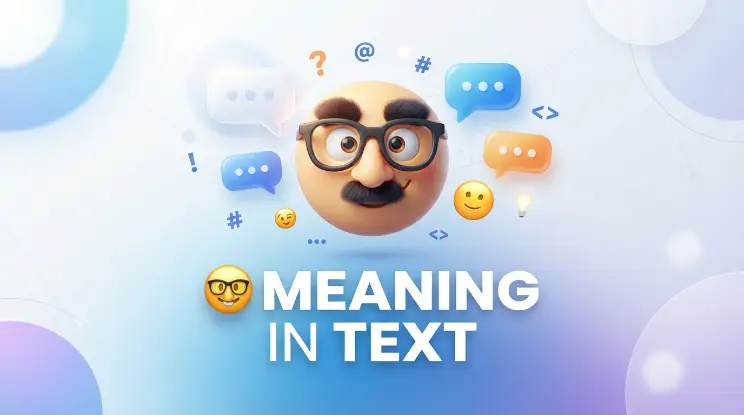
The 🥸 meaning in text is commonly associated with disguise, pretending, hiding, secrecy, or being sneaky in a playful way. The emoji is officially known as the Disguised Face and shows a face wearing a large fake nose, glasses, eyebrows, and a mustache.
In everyday texting, someone may send 🥸 when they are pretending to be someone else, hiding something harmless, acting like a detective, or joking about being secretive.
For example:
“Nobody saw me take the last cookie 🥸”
Here, 🥸 suggests that the person is jokingly acting like a secret agent or someone trying to hide what they did.
Another example is:
“I may or may not have checked their profile 🥸”
In this situation, the emoji adds a sneaky or playful tone. The person is admitting something while pretending to be innocent.
What does 🥸 mean from a girl?
When a girl sends 🥸 in a casual conversation, it can suggest that she is being playful, pretending, teasing, or hiding something.
For example:
“I definitely wasn’t looking at your pictures 🥸”
The emoji makes the statement sound humorous because the speaker is pretending that she did not do something she probably did.
However, 🥸 does not automatically indicate romantic interest. The surrounding conversation matters.
What does 🥸 mean from a guy?
When a guy uses 🥸, it can have a similar meaning. He might be joking about being sneaky, pretending to know something, hiding an action, or teasing someone.
For example:
“I know what you did yesterday 🥸”
This could make the message sound playful and mysterious rather than serious.
Is 🥸 a secret emoji?
Not exactly. The emoji itself does not literally mean secret. Its main idea is disguise or pretending. Depending on the context, however, people may use it to suggest secrecy, hiding, spying, or being sneaky.
This distinction is important because 🥸 can communicate a playful version of secrecy rather than serious confidentiality.
Background & Origin of 🥸

The 🥸 emoji comes from the broader development of digital emoji communication. Emojis were created to help people communicate emotions, reactions, expressions, and concepts in short digital messages.
The Disguised Face emoji was added to Unicode and became available across modern emoji-supported platforms. Its visual design combines several features associated with disguises, including glasses, a fake nose, eyebrows, and a mustache.
Before emojis became common, people often had to explain playful expressions using words such as “I’m undercover,” “just kidding,” “I’m hiding,” or “don’t tell anyone.”
The 🥸 emoji provides a much shorter way to communicate that same general idea.
As messaging apps and social networks became more visual, emojis started taking on meanings beyond their literal names. Users began combining 🥸 with words and other emojis to create different tones.
For example:
“I didn’t see anything 🥸”
The literal emoji is a disguised face, but the intended message may be:
“I’m pretending I don’t know.”
This is why understanding the 🥸 meaning in text requires looking at both the emoji and the surrounding conversation.
Usage in Different Contexts
The meaning of 🥸 can change depending on where and how someone uses it. A message between close friends may have a completely different tone from a professional conversation.
🥸 in Texting or Chat Messages
In ordinary texting, 🥸 is usually playful.
People may use it when they are:
- Pretending
- Hiding something harmless
- Acting sneaky
- Teasing a friend
- Making a joke
- Pretending to be innocent
- Acting mysterious
- Suggesting undercover behavior
Example:
“Did you eat my fries?”
“Me? Never 🥸”
The emoji makes the response sound humorous rather than believable.
Another example:
“I might have ordered another pair of shoes 🥸”
Here, 🥸 suggests playful guilt.
🥸 on Social Media
On Instagram, TikTok, Snapchat, and X, people may use 🥸 in captions, comments, replies, and direct messages.
For example:
“Just casually checking the comments 🥸”
Or:
“When you know the gossip but can’t say anything 🥸”
The emoji can make the post feel humorous and slightly mysterious.
🥸 in Professional Communication
The emoji is generally informal, so it should be used carefully in professional communication.
A coworker might use it in a casual team chat:
“I may have fixed the issue before the meeting 🥸”
Here, it can communicate a playful sense of accomplishment.
However, using 🥸 in a formal email to a client or manager may not be appropriate unless the workplace culture is very casual.
For formal communication, words such as discreet, confidential, private, or anonymous are usually clearer.
Platform-Specific Meanings
The basic meaning of 🥸 generally remains the same across platforms, but the way people use it can differ.
| Platform | Common Meaning | Example Use |
| Pretending, hiding, being sneaky | “I didn’t take your snack 🥸” | |
| Playful secrecy or pretending | “Just checking their profile 🥸” | |
| TikTok | Humor, disguise, undercover behavior | “POV: You’re pretending you didn’t hear the gossip 🥸” |
| Snapchat | Joking, teasing, hiding something | “Don’t tell anyone 🥸” |
| Twitter/X | Sarcasm, humor, pretending | “I have absolutely no idea what’s happening 🥸” |
These platform interpretations are not fixed rules. The same emoji can communicate different feelings depending on the conversation.
Other Fields Using the Disguised Face Emoji
Although 🥸 is mainly used in casual digital communication, its concept can connect to several themes.
Disguise and Costumes
The most direct interpretation is disguise.
Someone may use 🥸 while talking about:
- Costumes
- Halloween
- Masks
- Acting
- Secret identities
- Detective characters
- Spy movies
Example:
“My Halloween costume is finally ready 🥸”
Privacy and Anonymity
People sometimes use 🥸 to jokingly suggest that they are hiding their identity.
For example:
“New account, who dis? 🥸”
This can imply that the person is acting anonymously or pretending to be someone else.
Detective or Spy Themes
The emoji can also suggest detective or spy behavior.
Example:
“Time to investigate 🥸🔎”
Here, the emoji combination creates an obvious detective theme.
Online Humor and Meme Culture
The disguised face emoji works particularly well with memes involving:
- Secret missions
- Snooping
- Gossip
- Pretending
- Fake identities
- Investigations
- “I wasn’t there” jokes
Its exaggerated appearance makes it naturally suited to humorous content.
Common Misconceptions & Mistakes
People sometimes misunderstand 🥸 because they assume every emoji has one fixed definition.
🥸 Does Not Literally Mean “Secret”
Although the emoji can represent secrecy in certain conversations, its central concept is disguise or pretending.
For example:
“Keep this between us 🥸”
Here, the sender may be using the emoji to make the secrecy playful.
But the emoji itself does not mean “confidential information.”
🥸 Does Not Always Mean Lying
Someone may use 🥸 while joking about a harmless situation.
For example:
“I didn’t eat the cake 🥸”
The speaker may obviously be joking rather than making a serious attempt to deceive someone.
🥸 Is Not the Same as 🤫
The 🤫 emoji is generally associated with silence, quietness, or keeping something secret.
The 🥸 emoji is more closely associated with disguise, pretending, and playful sneakiness.
🥸 Is Not the Same as 🕵️
The 🕵️ emoji represents a detective or investigator more directly.
🥸 can suggest detective or spy behavior, but its primary visual idea is a disguised face.
🥸 Does Not Automatically Mean Someone Is Hiding Their Identity
In many conversations, it is simply a joke.
Always examine the words around the emoji before assigning a serious meaning.
Similar Terms & Alternatives
Several emojis and words can communicate ideas related to 🥸.
| Term or Emoji | Meaning | Example |
| 🤫 | Silence or keeping something quiet | “Don’t tell anyone 🤫” |
| 🕵️ | Detective or investigation | “I’m investigating this 🕵️” |
| 🫣 | Shyness, embarrassment, or hiding | “I can’t look 🫣” |
| 😏 | Smirking or suggestive confidence | “You know what I mean 😏” |
| 👀 | Watching, noticing, or curiosity | “I’m watching 👀” |
| Secret | Something intentionally hidden | “It’s a secret.” |
| Private | Not intended for everyone | “Keep this private.” |
| Confidential | Information restricted to authorized people | “This is confidential.” |
| Disguise | Appearance used to hide identity | “He wore a disguise.” |
| Sneaky | Doing something secretly or quietly | “That was sneaky.” |
Choosing between these terms depends on the intended tone.
For example, confidential sounds formal and serious, while 🥸 usually sounds playful.
How to Respond Chat Examples
Knowing the 🥸 meaning in text is useful when deciding how to respond.
Conversation 1: With a Friend
Friend:
“I definitely didn’t eat your chocolate 🥸”
You:
“Your evidence is terrible 😂”
In this conversation, 🥸 indicates playful pretending.
Conversation 2: With a Crush
Crush:
“I wasn’t checking your profile 🥸”
You:
“Sure… I totally believe you 😂”
Here, the emoji can create a teasing and playful atmosphere.
It does not necessarily prove romantic interest, but it can make the conversation feel less serious.
Conversation 3: With a Colleague
Colleague:
“I may have finished the report before everyone else 🥸”
You:
“Okay, secret productivity expert 😄”
The emoji is being used humorously to suggest a playful secret or achievement.
Differences from Similar Words
Understanding the difference between disguise, secret, private, confidential, and sneaky can help you interpret 🥸 correctly.
🥸 vs. Secret
A secret is information that someone intentionally keeps from others.
Example:
“I have a surprise for you. It’s a secret.”
🥸 can suggest that someone is pretending to hide something, but it does not necessarily indicate a real secret.
🥸 vs. Private
Private means something is intended for a limited person or group.
Example:
“This is a private conversation.”
The 🥸 emoji can make a private situation seem playful, but it does not officially establish privacy.
🥸 vs. Confidential
Confidential is more formal. It often describes information that should not be shared without permission.
Example:
“The document contains confidential information.”
Using 🥸 in such a situation would generally make the message sound less formal.
🥸 vs. Sneaky
Sneaky means doing something secretly or without being noticed.
This is one of the closest everyday descriptions of how 🥸 can feel in casual texting.
Example:
“You were sneaky 🥸”
The emoji reinforces the playful meaning.
🥸 vs. Disguise
A disguise is something used to change or hide someone’s appearance or identity.
This is the closest literal concept behind the emoji.
Relevance in Online Conversations & Dating Apps
The 🥸 meaning in text can be especially interesting on dating apps because conversations often depend heavily on tone.
Text does not provide facial expressions, voice, or body language. An emoji can therefore help indicate whether a statement is serious, teasing, sarcastic, or playful.
For example:
“I definitely wasn’t stalking your profile 🥸”
On a dating app, this could be a playful way of admitting that someone looked through another person’s profile.
Another example:
“I know your favorite restaurant 🥸”
The emoji may make the statement sound mysterious or teasing.
However, users should avoid assuming that 🥸 has a specific romantic meaning.
It can simply mean:
“I’m joking.”
“I’m pretending.”
“I know something.”
The conversation provides the real context.
🥸 in Flirty Conversations
Someone may use 🥸 to add a teasing element to a message.
For example:
“Maybe I was waiting for you to text first 🥸”
This sounds playful and slightly mysterious.
A suitable response might be:
“So you were pretending not to care? 😂”
The emoji allows both people to keep the conversation light.
Popularity & Trends Over Time
Emoji meanings develop through online culture rather than remaining completely fixed.
The 🥸 emoji became increasingly recognizable as users adopted it for jokes involving disguises, pretending, spying, anonymity, and playful deception.
Social media and meme culture have helped expand the number of situations in which people use expressive emojis.
On platforms such as TikTok, Instagram, Snapchat, and X, emojis often become part of recurring jokes or formats. Users may attach 🥸 to a statement that is obviously exaggerated or intentionally misleading.
For example:
“Me pretending I don’t know the gossip 🥸”
The humor comes from the contrast between the statement and the disguised-face emoji.
Search interest can also change when an emoji becomes popular in memes or viral posts. Google Trends can provide information about search interest for related terms over particular periods, but it should not be treated as a precise measurement of how often people use the emoji in private conversations.
Why Context Matters for 🥸
Emoji interpretation is not always straightforward.
Consider this message:
“I know where you live 🥸”
Depending on the relationship, it could be an obvious joke, playful teasing, or something that feels uncomfortable.
Now consider:
“I found the missing cookies 🥸”
This is much more likely to be harmless humor.
The words, relationship between the speakers, previous messages, and overall tone all affect the interpretation.
That is why you should not automatically translate 🥸 as one specific word.
Instead, think of it as a tone marker that can communicate ideas such as:
- “I’m pretending.”
- “I’m hiding something.”
- “I’m being sneaky.”
- “I’m undercover.”
- “I’m joking.”
- “I know something.”
- “Don’t mind me.”
- “I’m acting innocent.”
When Should You Use 🥸?
The emoji works best in informal situations where humor or playful communication is expected.
You can use it when:
- Making a harmless joke
- Pretending you did not do something
- Teasing a friend
- Talking about a disguise
- Making a spy joke
- Pretending to be innocent
- Hinting that you know something
- Making a playful social media caption
Examples include:
“Me pretending I didn’t see the message 🥸”
“Operation: get the last slice 🥸”
“I know something you don’t know 🥸”
“Just doing some totally normal investigation 🥸🔎”
When Should You Avoid 🥸?
Because 🥸 is informal, it may not be suitable for serious or official communication.
Avoid relying on it when discussing:
- Legal matters
- Confidential business information
- Serious accusations
- Formal workplace policies
- Medical information
- Financial instructions
- Official documents
If something is genuinely confidential, say so directly rather than relying on an emoji.
For example, instead of:
“Don’t share this 🥸”
a professional message would be clearer as:
“Please keep this information confidential.”
🥸 Meaning in Different Relationships
The same emoji can feel different depending on who sends it.
From a Friend
It usually suggests joking, teasing, or pretending.
“I didn’t touch your snacks 🥸”
From a Crush
It may add playful mystery or teasing.
“Maybe I was waiting for you 🥸”
From a Partner
It can suggest playful secrecy or joking.
“I have a surprise for you 🥸”
From a Colleague
It may simply be workplace humor.
“I somehow finished the task early 🥸”
From a Stranger
The meaning may be less obvious. Look at the surrounding message before deciding what the person intended.
🥸 Meaning in Social Media Captions
Social media users often choose emojis because they can communicate an attitude without adding many words.
A caption such as:
“Nobody needs to know 🥸”
can imply playful secrecy.
A caption like:
“Just casually investigating 🥸”
can suggest curiosity or detective behavior.
Another example:
“Me pretending everything is normal 🥸”
uses the emoji to reinforce the joke.
The emoji is particularly useful when the creator wants a caption to sound humorous rather than completely serious.
Can 🥸 Be Flirty?
Yes, 🥸 can appear in flirty conversations, but it is not inherently a flirting emoji.
Its flirty interpretation depends on the message.
For example:
“Maybe I was looking at your pictures 🥸”
could be playful flirting.
But:
“I forgot my password 🥸”
has no obvious romantic meaning.
Therefore, 🥸 should not automatically be interpreted as a romantic signal.
The surrounding conversation provides the necessary context.
Can 🥸 Mean “I Know Something”?
Yes, people sometimes use 🥸 when they want to suggest that they know something but are pretending not to.
For example:
“Interesting… very interesting 🥸”
This can suggest:
“I know what’s going on.”
Another example:
“I saw what happened 🥸”
The emoji adds a playful or mysterious feeling.
Again, this is a contextual interpretation rather than the emoji’s only official meaning.
Frequently Asked Questions
What does 🥸 mean in text?
The 🥸 emoji usually means disguise, pretending, being sneaky, hiding something, or acting mysterious. It is commonly used in a playful or humorous way.
What does 🥸 mean from a girl?
A girl may use 🥸 to show that she is joking, pretending, teasing, or acting innocent. Its meaning depends on the surrounding conversation and does not automatically indicate flirting.
What does 🥸 mean from a guy?
A guy may use 🥸 to suggest that he is being sneaky, pretending, hiding something harmless, or joking around. Context determines the exact interpretation.
Is 🥸 a secret emoji?
Not exactly. 🥸 officially represents a disguised face. People sometimes use it to suggest secrecy or hiding something, but its primary idea is disguise and pretending.
Is 🥸 a flirting emoji?
It can be used in flirting, especially when someone is teasing or being playfully mysterious. However, 🥸 is not exclusively a flirting emoji.
What is the difference between 🥸 and 🤫?
🥸 generally suggests disguise, pretending, or playful sneakiness, while 🤫 usually suggests silence, quietness, or keeping something secret.
What does 🥸 mean on Instagram or TikTok?
On Instagram and TikTok, 🥸 is often used for humor, pretending, secretive jokes, undercover behavior, or playful captions. The exact meaning depends on the post or conversation.
Conclusion
The 🥸 meaning in text is primarily connected with disguise, pretending, playful secrecy, and being sneaky. The Disguised Face emoji can make an ordinary message sound humorous, mysterious, teasing, or intentionally suspicious. People commonly use it in texts, social media captions, comments, memes, dating conversations, and casual chats.
Remember that 🥸 does not have one universal interpretation in every conversation. It might mean “I’m pretending,” “I’m hiding something,” “I’m being sneaky,” or simply “I’m joking around.” The best way to understand it is to look at the words around the emoji and consider your relationship with the sender.

I am William Scott, a passionate content creator and enthusiast dedicated to making complex topics simple and easy to understand. I focus on delivering valuable, well-researched, and engaging content that helps readers find clear answers quickly. I enjoy writing about digital trends, language meanings, and practical knowledge that adds real value to everyday learning.